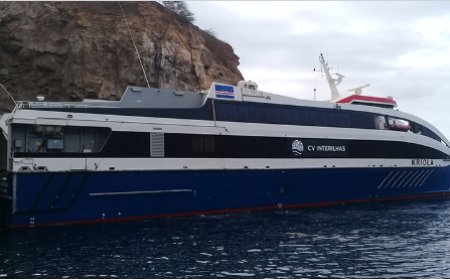







































The government is not obligated to hand over the ships to the concessionaire, says a source in the sector.
A source with knowledge of the workings of national maritime transport and the CV Interilhas concession contract believes that the Government is not contractually obliged to deliver to the concessionaire the ships it may acquire for inter-island maritime transport.
The source, whose professional position in the sector requires anonymity, analyzed the provisions of the concession contract and its addenda. Their interpretation is that there is no clause that obligates the State to automatically hand over its ships to CV Interilhas.
"There is no clause in the Concession Agreement and its Addenda that 'OBLIGATES' the 'GOVERNMENT MUST' deliver any ships it acquires to the Concessionaire," he states.
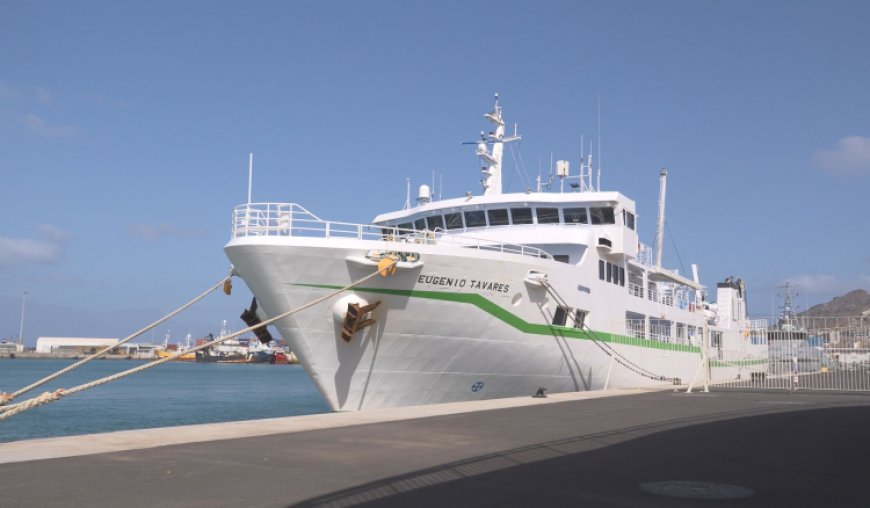
The issue gained new relevance after CV Interilhas requested that the Minister of the Sea, João do Carmo Soares, integrate the new ships Djabraba and Nhô Eugénio Tavares into the current concession. The company reportedly cited potential contractual and compensation liabilities should the vessels be used by other operators.
The source draws attention to the distinction between the Public Inter-island Maritime Transport Service, the subject of the concession, and the maritime transport services provided in the market by other national shipowners.
In their interpretation, the exclusivity granted to CV Interilhas is limited to the concessioned public service. This does not mean that the State is prevented from making its own vessels available to other national operators through lease agreements.
"The Government (...) can indeed rent its ships normally to the country's Inter-island Maritime Transport Service," he argues.
The source cites the Praia d'Aguada as an example of a vessel used under a rental model, arguing that there are alternatives to the automatic integration of new ships into the concessionaire's fleet.
The contract, however, requires a joint reading of its provisions. Clause 7 limits exclusivity to the concessioned public service. Clause 8 of the 2023 amendment establishes a transitional regime associated with the introduction of new vessels into the concession by the State and/or the concessionaire, providing for adjustments to the operational and economic-financial model.
Clause 21 also provides for mechanisms to restore economic and financial equilibrium under certain circumstances. Therefore, the use of the ships by other operators must be assessed in light of the contract and its potential effects; it is not enough to simply state that this option is free of consequences.
The central question remains: should the new ships be delivered to CV Interilhas as a contractual obligation, or is it up to the State to decide how to use them, including through other national operators?
According to the source, the contract does not stipulate automatic delivery. The decision regarding the fate of the vessels must therefore be accompanied by transparency and a publicly justified explanation.